
There was a time when businesses judged websites primarily by appearance. Clean layouts, attractive colors, and visual appeal were often considered enough to create a strong online presence.
That approach has changed significantly.
Today, websites are expected to do much more than simply look modern. They are now responsible for influencing user experience, improving search visibility, increasing engagement, and driving conversions. Businesses are beginning to realize that design decisions directly impact how customers interact with a brand online.
88% of users are less likely to return to a website after a poor user experience
This shift of website design trends are changing how companies approach digital presence and what they expect from a modern website design agency.
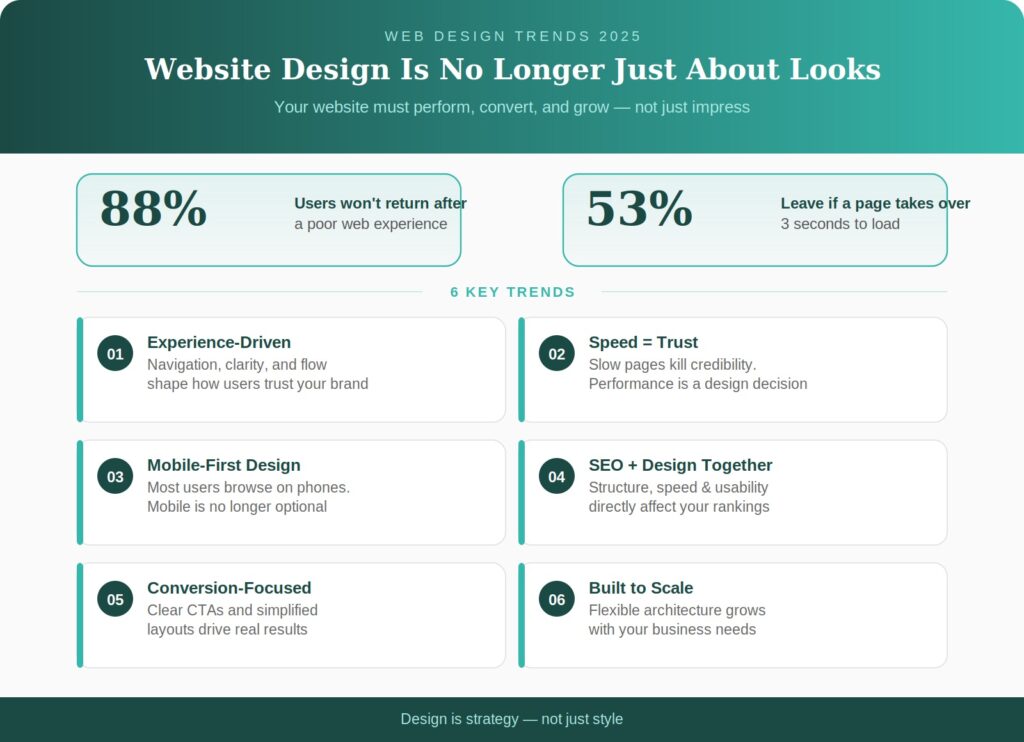
Trend 1 – Websites Are Becoming Experience-Driven
Modern websites are no longer built only for visual presentation. Businesses now focus heavily on how users interact with a website from the moment they arrive.
Navigation clarity, page structure, readability, and interaction flow all influence user behavior. Even visually attractive websites can fail if users struggle to find information quickly.
Here at DigiSparsh we approach website strategy differently – focusing not only on aesthetics but also on how users experience the brand digitally.
Businesses increasingly prioritize:
- intuitive navigation
- cleaner user journeys
- simplified interactions
because user experience now plays a direct role in customer retention and conversions.
Trend 2 – Speed and Performance Influence Customer Trust
Website performance has become one of the most important aspects of modern web design.
Users expect websites to load almost instantly. Slow-loading pages often create frustration and reduce trust in the business itself.
53% of visitors leave websites that take longer than 3 seconds to load
This means design can no longer rely heavily on oversized visuals or unoptimized elements that affect speed.
For brands working with DigiSparsh, performance optimization is often treated as part of the overall design strategy rather than a separate technical process. Modern website experiences must balance visuals with functionality and speed.
Trend 3 – Mobile-First Design Is No Longer Optional
Mobile traffic now dominates most industries, which has completely changed website design priorities.
Instead of designing primarily for desktop screens, businesses now need websites that perform smoothly across:
- smartphones
- tablets
- different screen sizes
Poor mobile experiences can reduce engagement significantly, especially for local businesses and ecommerce platforms.
A modern website design agency now approaches design with mobile usability in mind from the very beginning rather than treating it as a secondary adjustment later.
Trend 4 – SEO and Website Design Now Work Together
Search engine optimization and web design were once treated as separate areas. That separation no longer works effectively.
Search engines now evaluate:
- page speed
- mobile responsiveness
- usability
- website structure
- user engagement
This means design directly impacts SEO performance.
Businesses that ignore technical and usability aspects during website design often struggle with organic visibility later. Many companies partnering with DigiSparsh now focus on integrating SEO considerations into the website planning process itself instead of treating optimization as an afterthought.
Trend 5 – Conversion-Focused Design Matters More Than Visual Complexity
Modern websites are increasingly designed around user actions rather than decorative visuals.
Businesses today want websites that help users:
- submit inquiries
- schedule consultations
- make purchases
- engage with content
This has shifted focus toward:
- clearer call-to-actions
- simplified layouts
- structured content flow
- conversion-driven interfaces
A visually impressive website may still fail if users are uncertain about what action to take next.
This is one reason why businesses working with a professional website design agency now evaluate websites based on engagement and conversion performance rather than appearance alone.
Trend 6 – Businesses Want Websites That Can Scale with Growth
Modern businesses evolve quickly, and websites are expected to evolve with them.
Companies today require websites that support:
- future SEO growth
- new service pages
- ecommerce expansion
- third-party integrations
- marketing campaigns
Rigid website structures often create limitations as businesses grow.
Forward-thinking digital teams now focus on building scalable website ecosystems instead of static web pages. This allows businesses to adapt more efficiently as market demands and customer expectations change.
Final Thought
Website design has evolved into a strategic business function rather than a purely creative exercise. Modern websites are now expected to support marketing, sales, branding, customer experience, and long-term growth simultaneously.
As user expectations continue changing, businesses are placing greater importance on usability, speed, responsiveness, and conversion-focused experiences. This evolution is redefining what businesses expect from an expert website design agency and how digital experiences are created moving forward.
FAQs
Why is website design important beyond visuals?
Modern website design affects user experience, SEO performance, trust, and conversions – not just appearance.
How does website speed impact user experience?
Slow-loading websites increase bounce rates and negatively affect customer engagement and trust.
Why is mobile-first design important?
Most users browse websites on mobile devices, making responsive experiences essential for usability and SEO.
Does website design influence SEO rankings?
Yes, search engines consider speed, mobile responsiveness, structure, and user experience when ranking websites.
What should businesses expect from a modern website design agency?
Businesses should expect strategy-driven design focused on performance, usability, scalability, and conversions.