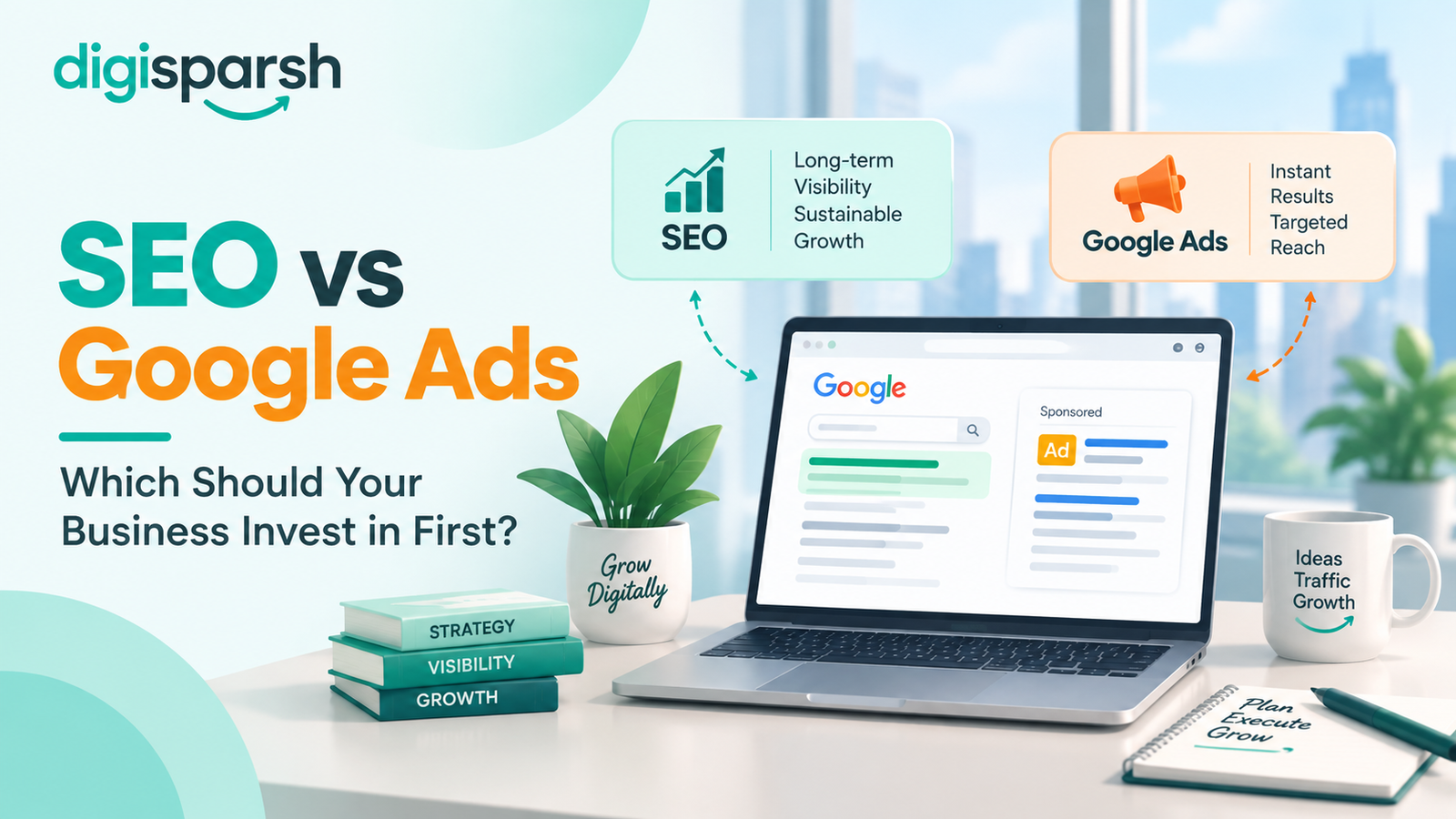
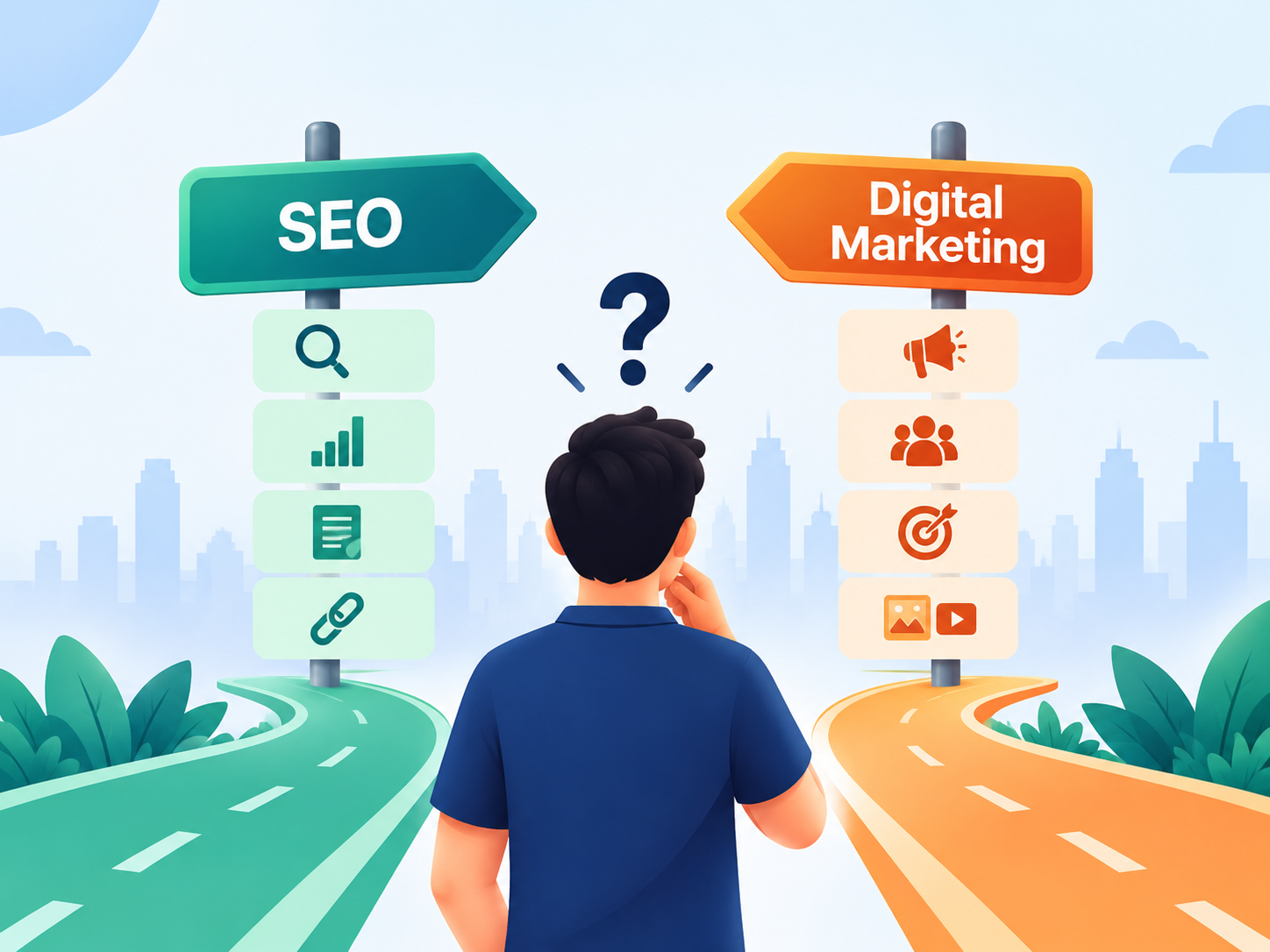
SEO is one specific discipline inside digital marketing. It’s the work of getting your website found in organic search results. Digital marketing is the umbrella term covering everything online: SEO, paid ads, social media, email, content, and now increasingly AI-search visibility too.
That much is true everywhere you read about this. But it’s the wrong question for most business owners to sit with. The real question isn’t “what’s the difference,” it’s which one your business needs to invest in first, given your budget, your timeline, and where your customers are actually looking for you. That’s what this post actually answers.
Why This Decision Trips Up So Many Indian SMBs
We talk to business owners every week who’ve already been pitched both sides of this. One agency tells them SEO is a waste of time without paid ads running alongside it. Another sells a “complete digital marketing package” that bundles in services the business doesn’t need yet, at a price that assumes they’re already a mid-sized company.
Neither pitch is dishonest exactly, but neither is built around the business asking. The honest answer depends on three things:
- How fast you actually need results
- How much organic search demand already exists for what you sell
- How much runway you have before you need paying customers
What SEO Actually Does
SEO is the process of making your website easier for Google to find, understand, and rank for the terms your customers are already searching. It touches:
- Technical site health: speed, mobile experience, crawlability
- On-page content: keyword targeting, structure, relevance
- Off-site authority signals: backlinks, mentions, reputation
Google’s own SEO Starter Guide covers the fundamentals in more depth if you want the primary source rather than a summarized version.
The core trade-off with SEO: it compounds, but it’s slow. A well-optimized page can keep bringing in customers for years without ongoing ad spend, but it typically takes several months of consistent work before that traffic shows up in a meaningful way.
What Digital Marketing Covers Beyond SEO
Digital marketing includes SEO but also spans a much wider set of channels:
- Paid search and social ads
- Organic social media
- Email and WhatsApp marketing
- Content marketing and influencer partnerships
And, increasingly in 2026, visibility inside AI-powered search tools like ChatGPT and Google’s AI Overviews. We wrote a separate guide on that shift if you want to go deeper: AI Search Foundation 2026.
The core trade-off with broader digital marketing: it can produce results immediately (an ad campaign can drive traffic the same day it launches), but that traffic generally stops the moment you stop paying for it.
A Decision Framework, Not Just a Definition
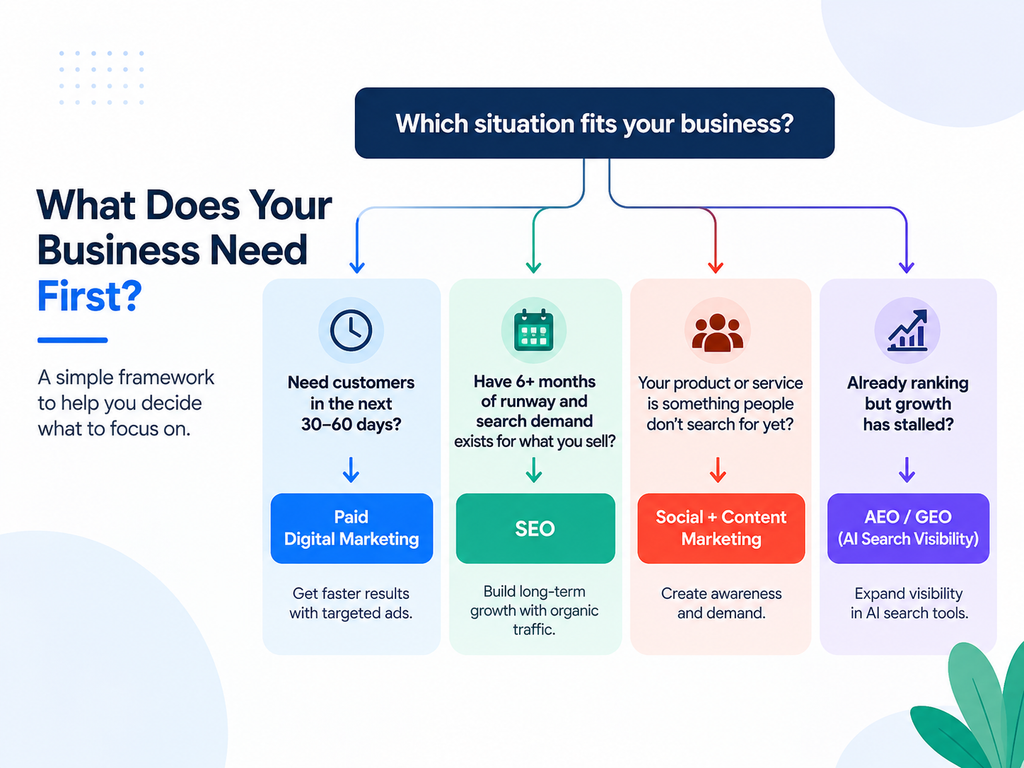
Instead of “it depends,” here’s a more useful way to think about it, based on where your business actually is:
- 6+ months of runway and steady search demand exists for what you sell: prioritize SEO first. It’s the more capital-efficient long-term play, and every month of delay is a month of compounding you’re not getting.
- Need customers in the next 30-60 days: (a new launch, a seasonal push, an event) prioritize paid digital marketing first, and build SEO in parallel for the medium term. Don’t expect SEO to bail out a short-term revenue gap.
- Your product or service isn’t searched for by name yet: (a genuinely new category, or something typically discovered through word-of-mouth or social proof) SEO has less to work with initially. Social and content-led digital marketing usually needs to create the demand before SEO can capture it.
- You’re already ranking reasonably well but growth has stalled: this is usually not an SEO-vs-digital-marketing question at all. It’s often a sign to look at AI search visibility (AEO/GEO) as the newer layer, since a meaningful share of research now happens inside AI Overviews and tools like ChatGPT before a user ever clicks a traditional link. Read more in our AI Search Foundation 2026 guide.
What This Looks Like in Practice
Consider two businesses that come to us with the exact same question. A Jaipur-based B2B packaging manufacturer with 18 months of runway and a handful of known competitors already ranking on Google is a textbook SEO-first case. There’s proven search demand, and the compounding payoff is worth the wait. A Pune-based DTC skincare brand launching a festive-season collection with six weeks until Diwali is the opposite case entirely. SEO won’t move fast enough to matter for that specific launch window, so paid social and search ads carry the immediate goal while SEO work continues quietly underneath for the months after. Same underlying question, two very different right answers, which is exactly why a generic “SEO vs digital marketing” explainer isn’t actually useful without knowing which situation you’re in.
The Combination That Actually Works
For most established small businesses, the honest long-term answer is both: run foundational SEO continuously while using targeted paid and social campaigns from a broader digital marketing plan for shorter-term goals. The mistake isn’t picking one; it’s picking either one without a clear reason tied to your actual timeline and budget, just because an agency pitched it convincingly.
If you’re not sure which stage your business is in right now, that’s a more useful starting conversation than “SEO or digital marketing.” The answer changes depending on the honest answer to that first question.
Frequently Asked Questions
Is SEO part of digital marketing or separate from it?
SEO is one component within the broader field of digital marketing, alongside paid advertising, social media, email marketing, and content marketing.
Which is cheaper, SEO or digital marketing?
SEO typically has lower ongoing cost per lead over time since it doesn’t require continuous ad spend, but it usually needs a longer runway before it produces results. Paid digital marketing costs more per lead on an ongoing basis but can produce traffic immediately.
Can a small business do SEO without a full digital marketing budget?
Yes. SEO can be pursued as a standalone, lower-cost strategy, especially for businesses with a longer runway and steady existing search demand for their product or service.
Should I invest in AI search visibility (AEO/GEO) instead of traditional SEO?
No. AEO and GEO build on top of a solid SEO foundation rather than replacing it. A technically sound, well-ranking website is still what AI search tools draw from when generating answers.